
By Jake Bergen, Drive Clean Colorado
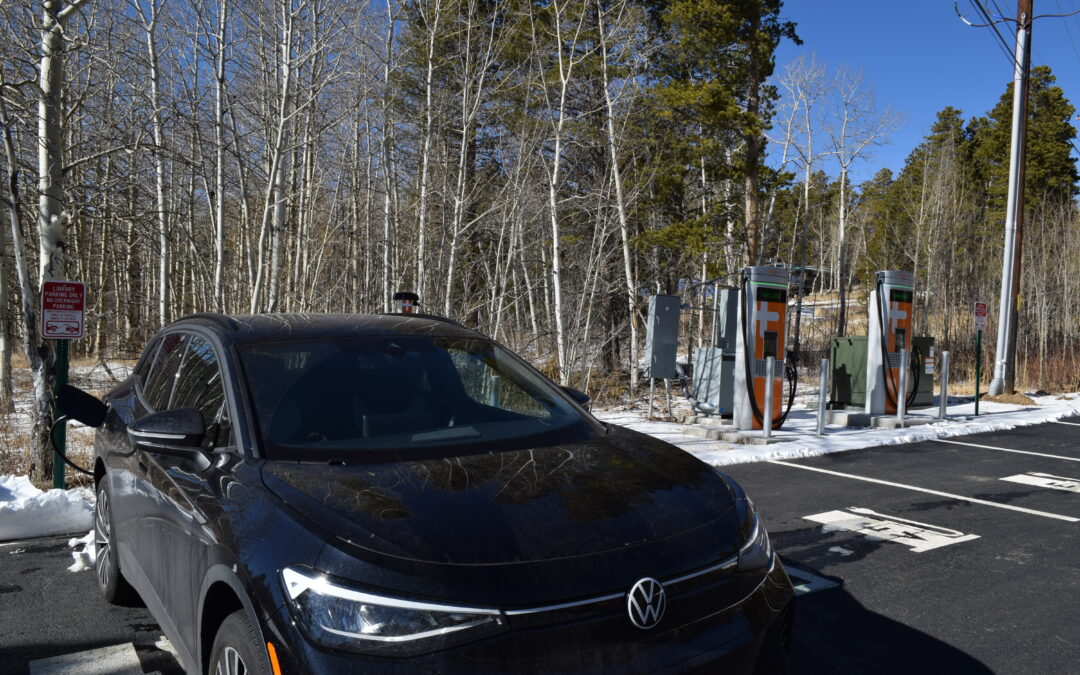
Gilpin County, located just 1 hour west of Denver, is home to elite leaf peeping, hiking, and world-class casinos. Sitting along the Peak-to-Peak Scenic Byway, Gilpin County is a popular destination for thoroughfares. In 2025, to increase accessibility for electric vehicle (EV) drivers and community members, Gilpin County installed two DC fast chargers (Level 3) and one dual-port Level 2 charger at the Gilpin County Public Library (15131 Hwy 119, Black Hawk, CO 80422).
With high upfront costs, Gilpin County was able to make these installations with the help of the Colorado Energy Office’s Charge Ahead Colorado (CAC) Grant. In 2024, they were awarded $62,500 through this grant, with final installations taking place in August 2025.
With about 3 months of data since the stations were up and running, they have had 1-2 unique users a day. They have noticed roughly 70% of users using the DC fast chargers and 30% using Level 2. Their current fee structure has a low energy rate with a higher fee for time.
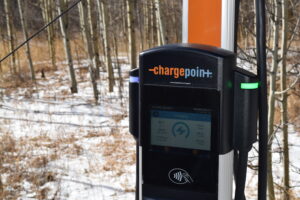
Level 2 Dual-Port Charger
- Energy Rate: $0.10/kWh
- Station Time Rate: First 4 hours: $1.00/hr; thereafter: $4.00/hr
DC Fast Charger (Level 3) Chargers
- Energy Rate: $0.10/kWh
- Station Time Rate: First 40 minutes: $0.35/min; thereafter: $0.50/min
- Session Rate: $0.99/session
- Maximum Fee: $75.00/session
- Cost Estimates:
- $6.50 for 15 minutes
- $13.00 for 30 minutes
- $20.25 for 45 minutes
- $29.00 for 1 hour
Energy Output
The dual-port Level 2 charger outputs up to 19.2 kW, while each of the two Level 3 chargers outputs up to 62.5 kW. However, the combined maximum output across all stations is capped at 80 kW. This decision was made due to the county’s local electricity rate structure — if more than 100 kW are drawn at once, the county is subject to surge pricing at significantly higher rates. Capping the output at 80 kW keeps usage safely below that threshold.
At current usage levels of only 1–2 unique users per day, this limitation has no practical impact. If demand increases and multiple stations are in use simultaneously, available power will be distributed across all four ports, with Level 3 stations receiving priority and Level 2 receiving a reduced share.
Expanding Charger Usage
Gilpin County aims to expand EV charging for local users and provide accessibility to Peak-to-Peak travelers. Their goal is not to make a profit, but they would ideally like to recoup costs and have this be a sustainable endeavor moving forward.
Since these chargers are only a few months old, their usage rates are fairly low, so it is important to get the word out about this new community resource! Follow along to see how Gilpin County addresses high utility rates and expands access to EV charging along Colorado’s Scenic Byways.
The Charge Ahead Colorado program accepts applications on a rolling basis throughout the year. Organizations interested in implementing public charging are encouraged to connect with their regional ReCharge Coach for guidance and support. To learn more about the EVs and current available funding opportunities, visit Drive Clean Colorado’s Resource page.
A Regional Effort Bigger Than One Town
This case study was developed through support from ChargeWest, a partnership spanning eight Intermountain West states working to make EV travel possible across long distances, scenic byways, and rural gateway communities.
By sharing examples like Gilpin County, communities across the region can move forward with confidence backed by real data and practical experience.