

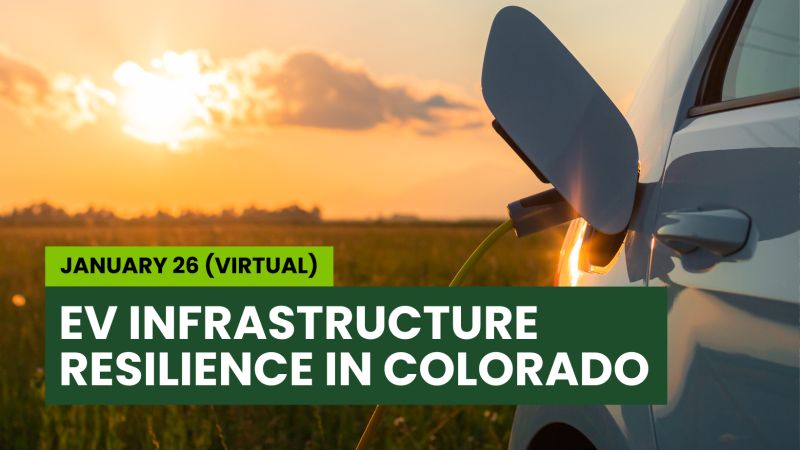
On January 26, 2026, Drive Clean Colorado and Colorado State University hosted a webinar exploring what it really takes to build resilient EV infrastructure in Colorado. The conversation was grounded in a statewide stakeholder study that engaged more than 180 voices from communities across the state, spanning rural, urban, and frontier regions.
Presented by Thomas Bradley of Colorado State University, the webinar moved beyond high-level goals and into the realities communities are facing today. The findings made one thing clear: EV infrastructure resiliency is not a single issue, but a system-level challenge that touches reliability, equity, workforce readiness, and the electric grid.
Participants highlighted that regional differences matter. What works along the Front Range may not translate directly to the Eastern Plains or mountain communities. Rural areas often face longer distances between chargers and limited capacity for maintenance, while urban areas wrestle with congestion, permitting complexity, and growing demand.
Another key takeaway was that reliability must be designed and maintained, not assumed. Charger uptime depends on thoughtful siting, appropriate hardware selection, and clear plans for operations and maintenance. Equity also surfaced as a core concern, with stakeholders emphasizing the need to ensure charging access reaches underserved communities, not just high-traffic corridors.
Finally, the discussion underscored the importance of workforce development and grid coordination. Without trained technicians and alignment with utility planning, charging infrastructure cannot perform reliably over the long term.
This webinar reinforced a central lesson for Colorado’s clean transportation transition: resilient EV infrastructure is built through coordination, local insight, and sustained investment. Listening to communities is not a side task. It is the work.
🎥 Watch the full webinar recording on YouTube to dig deeper into the findings and discussion.
📊 View the full slide deck from the presentation to explore the findings in more detail.